Intro
A long time ago, Chongxi had actually already visited Chiang Kai-shek’s former residence once, but since that was so long ago the details have been forgotten, so this time I planned to visit again, refresh my memory, and record it along the way
A Brief Introduction
Chiang’s former residence is in Xikou Town, Fenghua District, Ningbo, Zhejiang, and it was the family home of Chiang Kai-shek and his son Chiang Ching-kuo
This isn’t just a single house but a whole complex of buildings: the ancestral residence Fenggao House, the Yutai Salt Shop where Chiang Kai-shek was born, the Wenchang Pavilion where he and Soong Mei-ling stayed, and the small Western-style house where Chiang Ching-kuo settled after returning from the Soviet Union — each with its own story. Xikou Town today preserves more than twenty sites from the Republic of China period, and it’s called the “number one town of the Republic of China era”; there’s a huge amount of information to take in as you walk around
What’s interesting is that before the PLA entered Xikou in 1949, Mao Zedong specifically ordered that this place be protected. The former residence of a political opponent has been preserved intact to this day, and that’s quite something when you think about it
Who Was Chiang Kai-shek
Though I think everyone knows him, let’s go over it briefly anyway
Chiang Kai-shek (Chiang Chung-cheng) was the leader of the Kuomintang in history. He did revolution alongside Sun Yat-sen in his early years, later nominally unified China through the Northern Expedition, and during the War of Resistance against Japan was the supreme commander of the China Theater. After that came the civil war with the Communist Party, and by 1949 he really couldn’t hold on any longer, so he took a group of people and retreated to Taiwan, where he continued serving as “president” until his death in 1975
Generalissimo Chiang was enormously controversial throughout his life, and people say all sorts of things about him, but no matter what, he is one of the twentieth-century Chinese figures you simply cannot get around
A Note Before Visiting
Chiang’s former residence is divided into the exterior and the interior. Photography isn’t allowed inside, and it’s a paid-ticket system; I don’t think it’s appropriate to go into the interior in detail here, so this article will just briefly cover the exterior. Walking around the exterior already gives you a good feel for it
Getting to Fenghua–Xikou
Chongxi set out from downtown Ningbo, first taking Metro Line 2, getting off at 轻纺城 to transfer to Fenghua bus route 988, riding it all the way to the terminus 公交溪口站, and then taking Fenghua bus route 266 to Chiang’s former residence
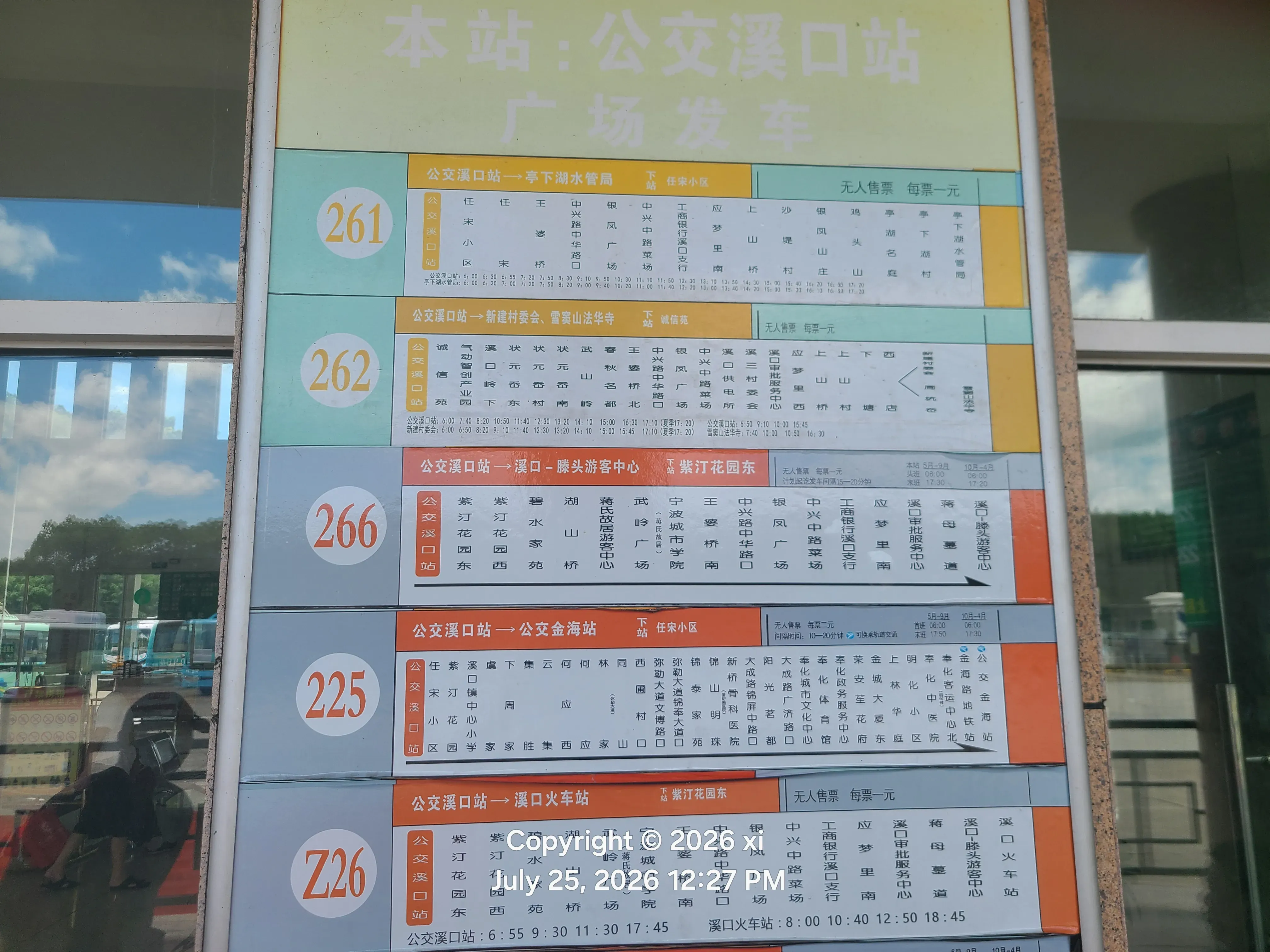
There was a little incident on the way. After passing through two tunnels, I arrived at the 蒋氏故居游客中心, and because I really don’t remember much, and hadn’t done any research beforehand, I went in and had a look around and realized something was off. Opening the map, well — Chiang’s former residence is supposed to be reached by getting off at 武陵广场, so I walked there on foot, and in the middle of summer I nearly died of heat on the way
From 公交溪口站 you can take 226/Z26 to 武陵广场 (Chiang’s former residence) and get off there
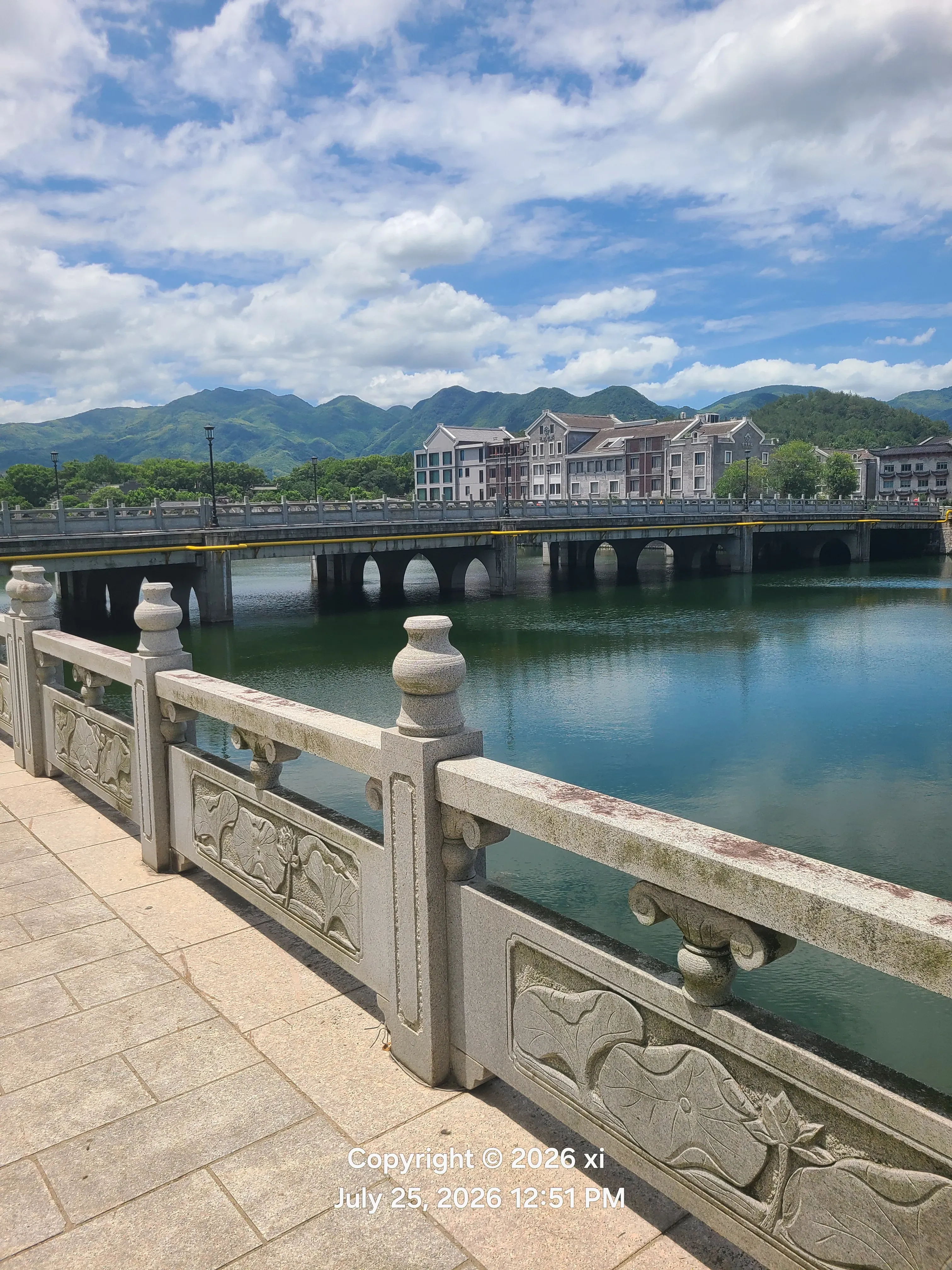
The photo was taken by the river at the main gate of the 蒋氏故居游客中心, facing the direction of 蒋氏故居
Arriving at Chiang’s Former Residence
After being roasted by the sun for a dozen or so minutes, I finally made it on foot
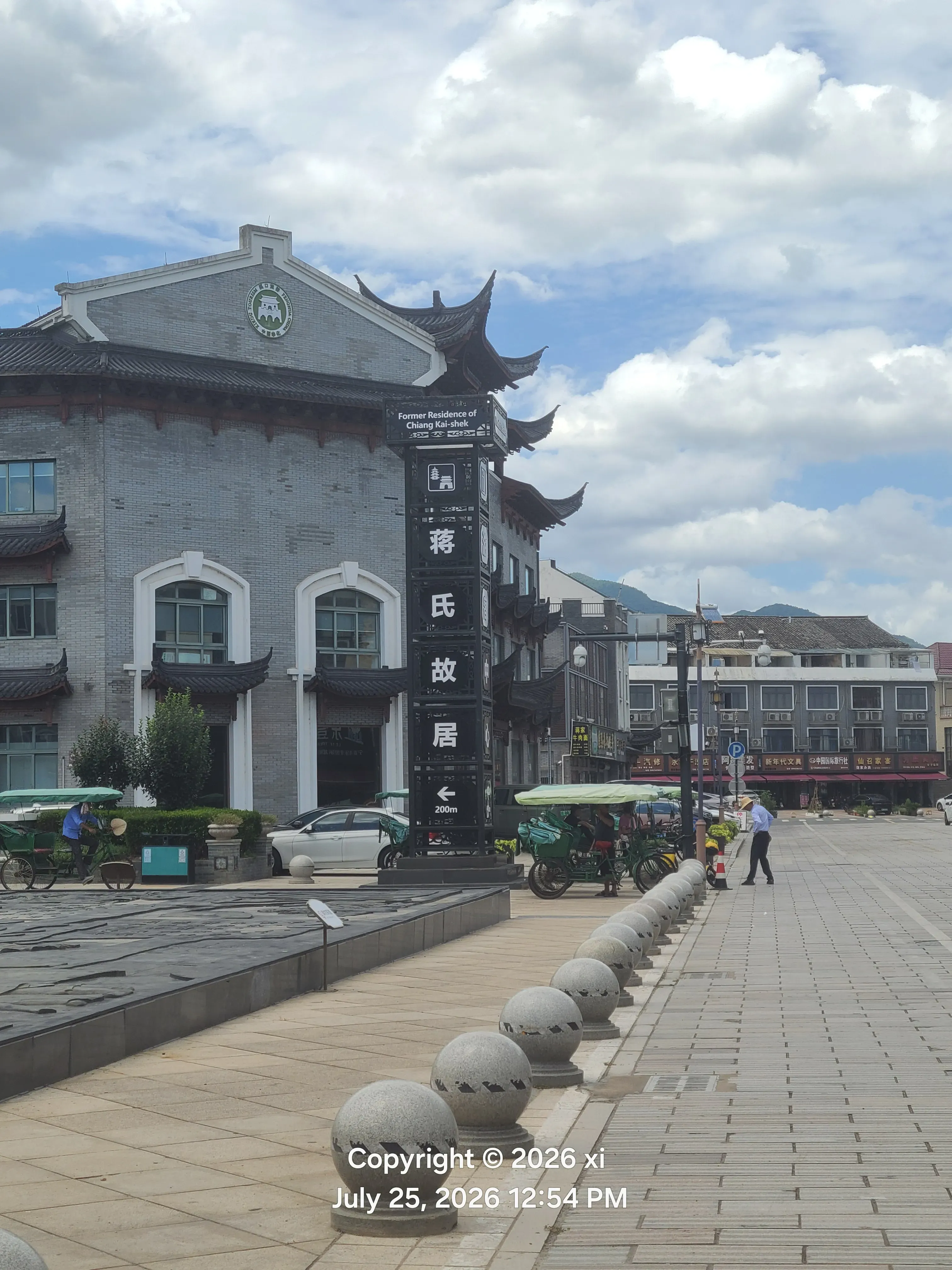
Wushan Temple
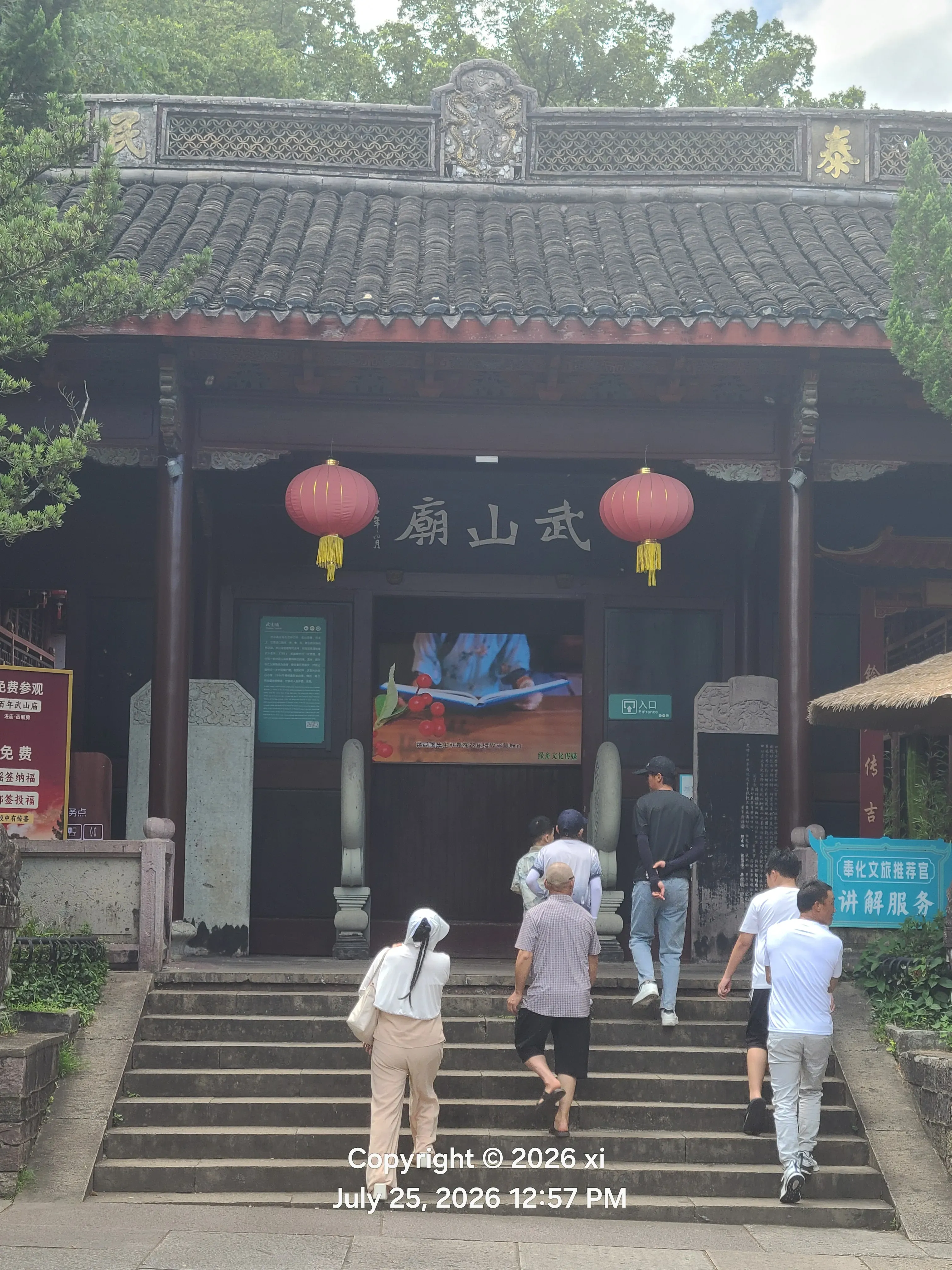
This is the temple on the right-hand side of the entrance to Chiang’s former residence. Entry is free. It was originally a shrine shared by the five great surnames of Xikou Town — Ren, Song, Jiang, Shan and Zhang. Later the Jiang family prospered more and more and it gradually became dominated by the Jiangs, and Chiang Kai-shek’s father even served as temple head, handling day-to-day management. Chiang Kai-shek did his early schooling here as a child, and later his son Chiang Ching-kuo also started school here, so it’s a place with ties to two generations of the Jiang family
Once inside, it didn’t feel like anything special, because the place has been completely taken over by vendors selling curios. Looking around the ground floor felt pretty uninteresting, so I just came out and went straight through the main gate of the former residence. Free places are often the first to turn into places that sell things (this sentence will be on the test later
Chiang’s Former Residence
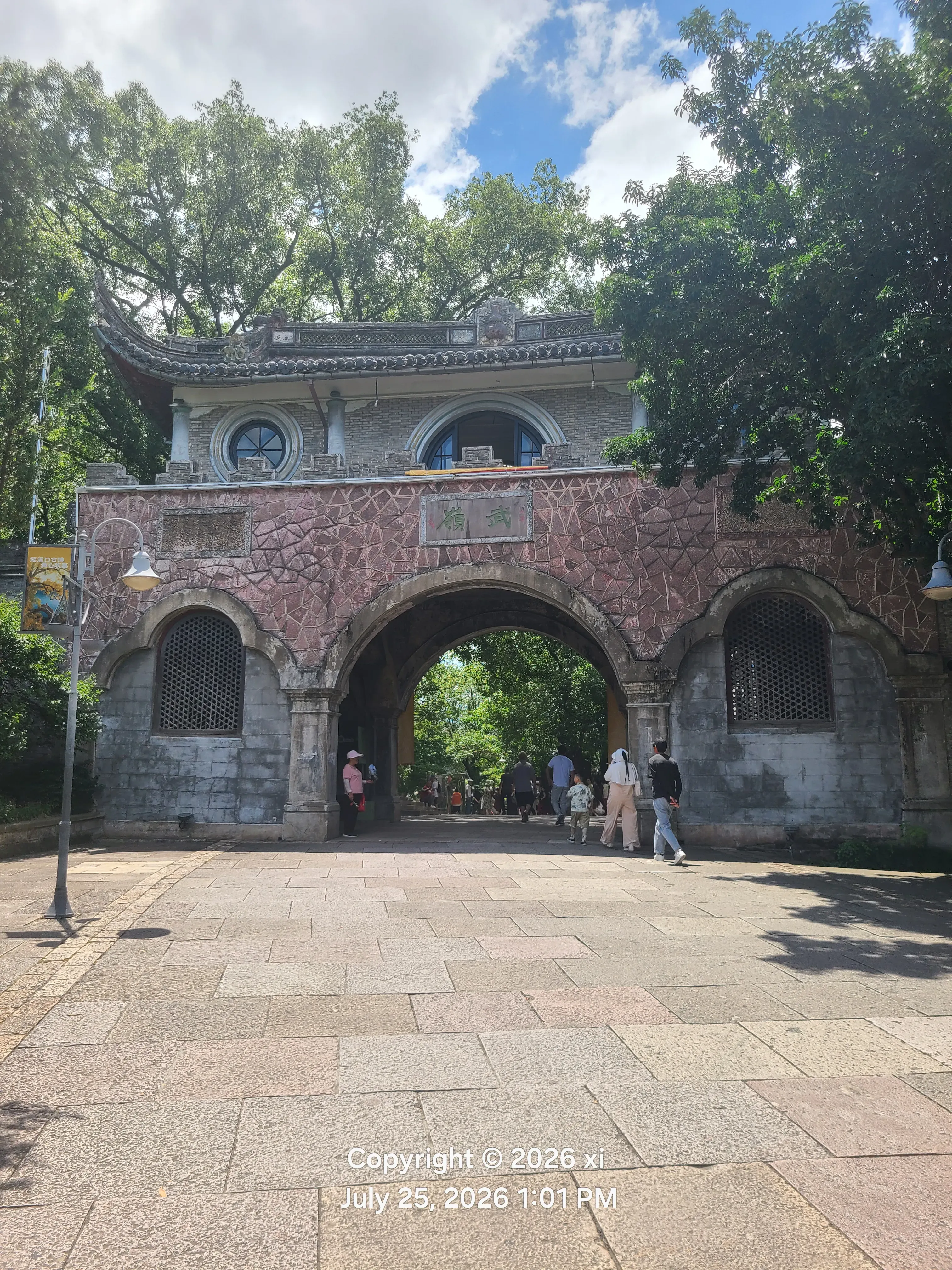
The photo shows the main gate
Just as I stepped through the main gate, a small blackboard on the right caught my eye. Looking closer, I nearly lost it: four big characters, Meiling Coffee (Chiang Kai-shek’s wife was named Soong Mei-ling
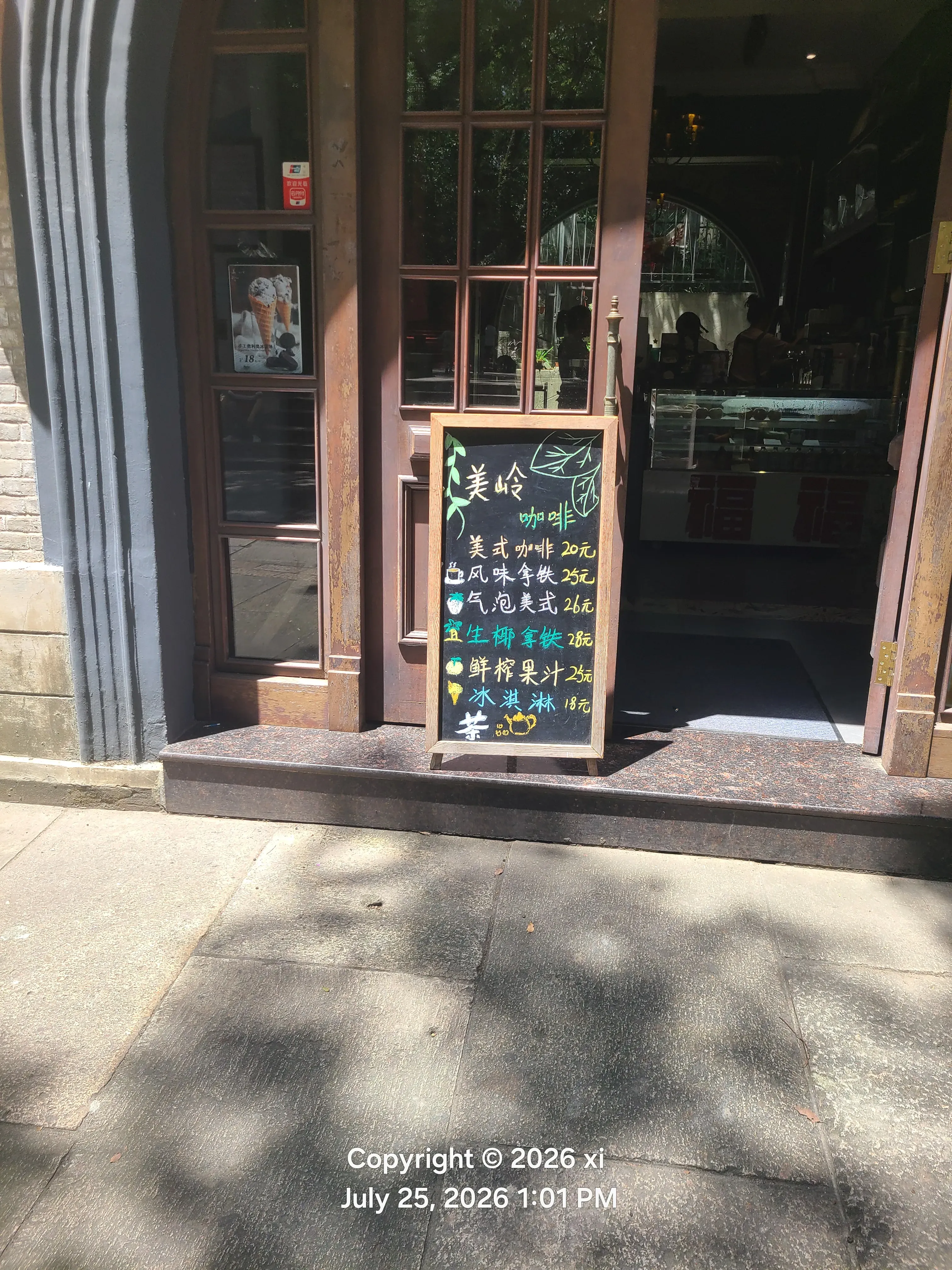
I won’t say any more about the rest; those who get it, get it. And that coffee is genuinely expensive
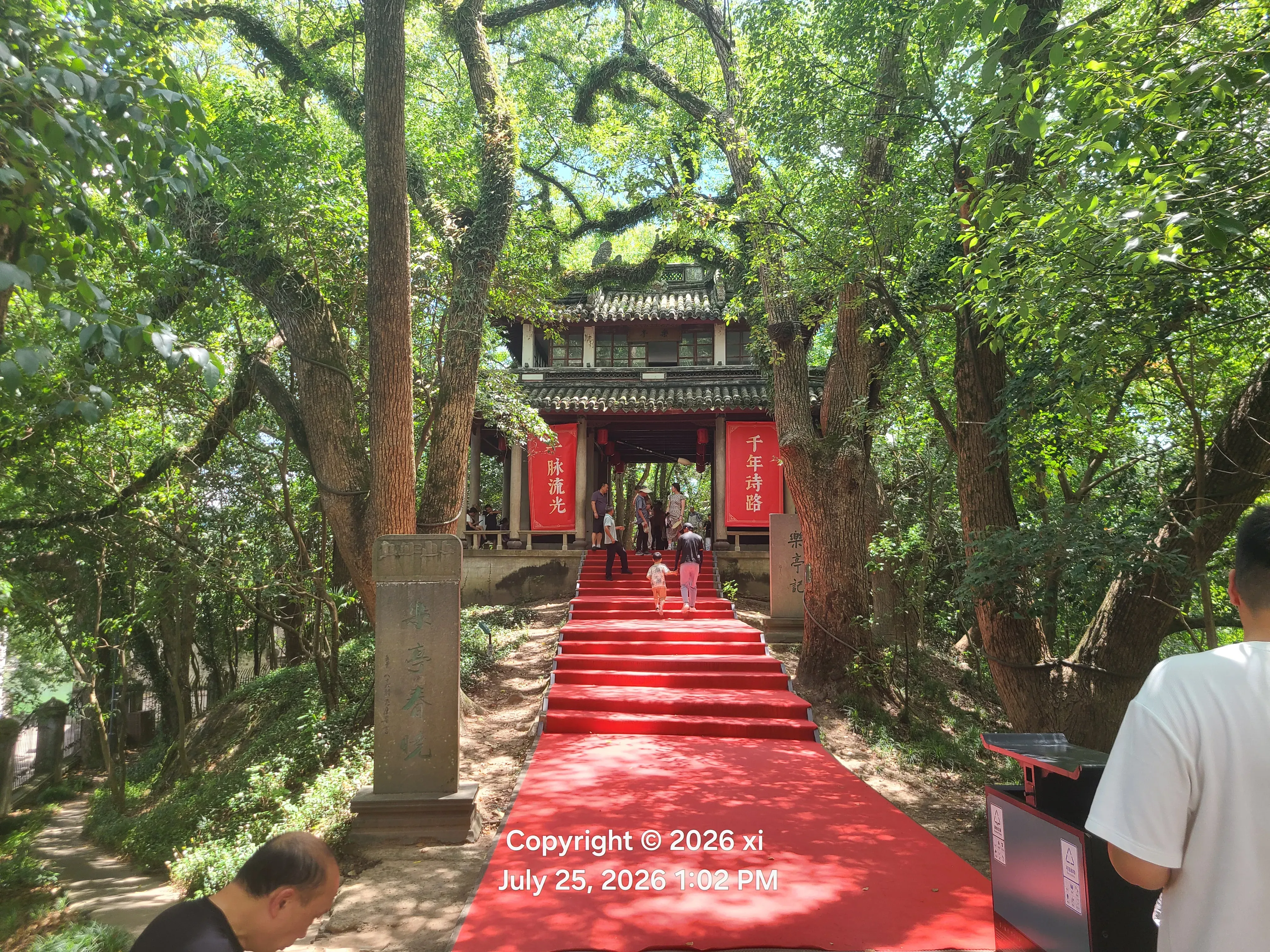
Wenchang Pavilion
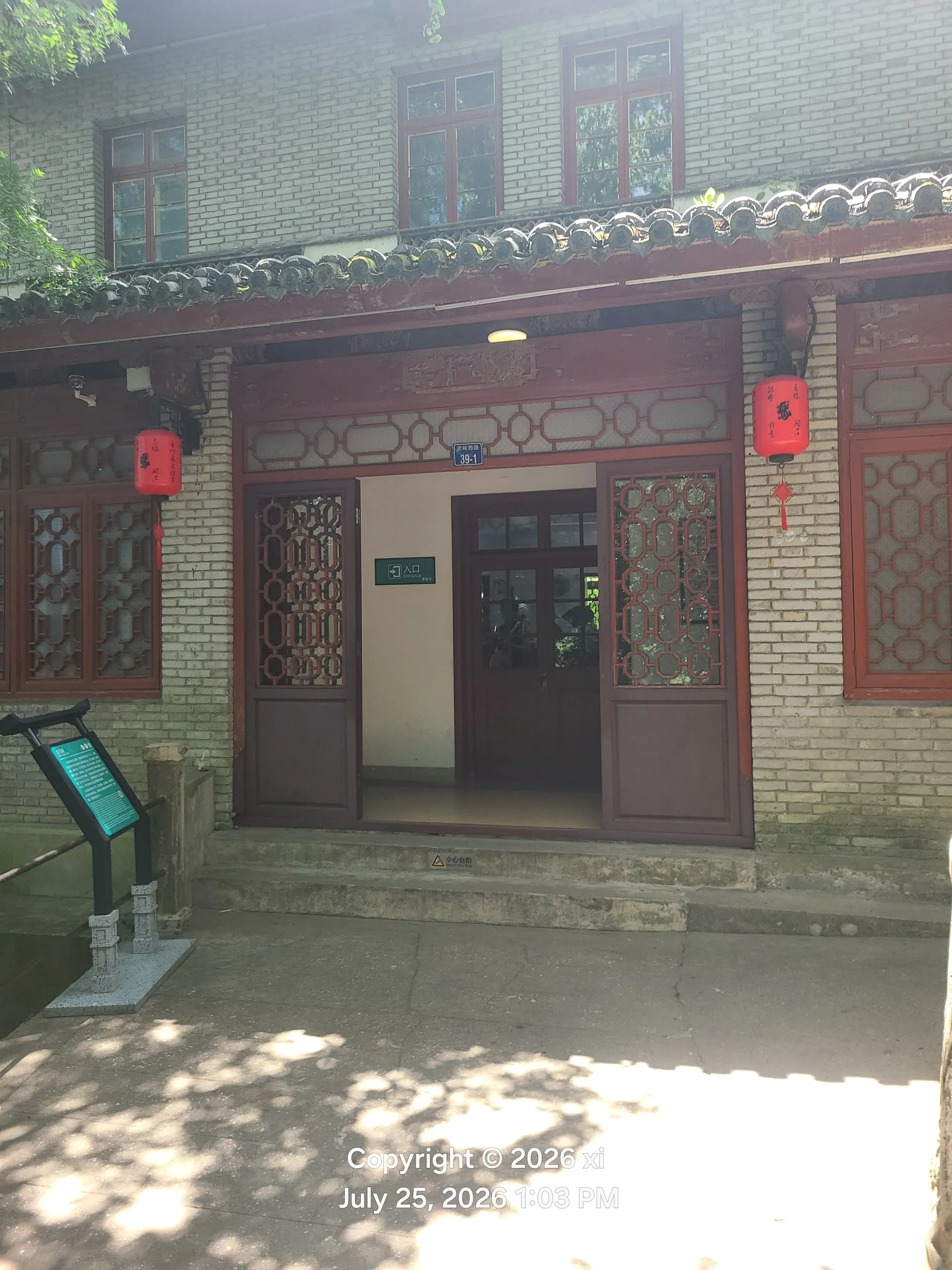
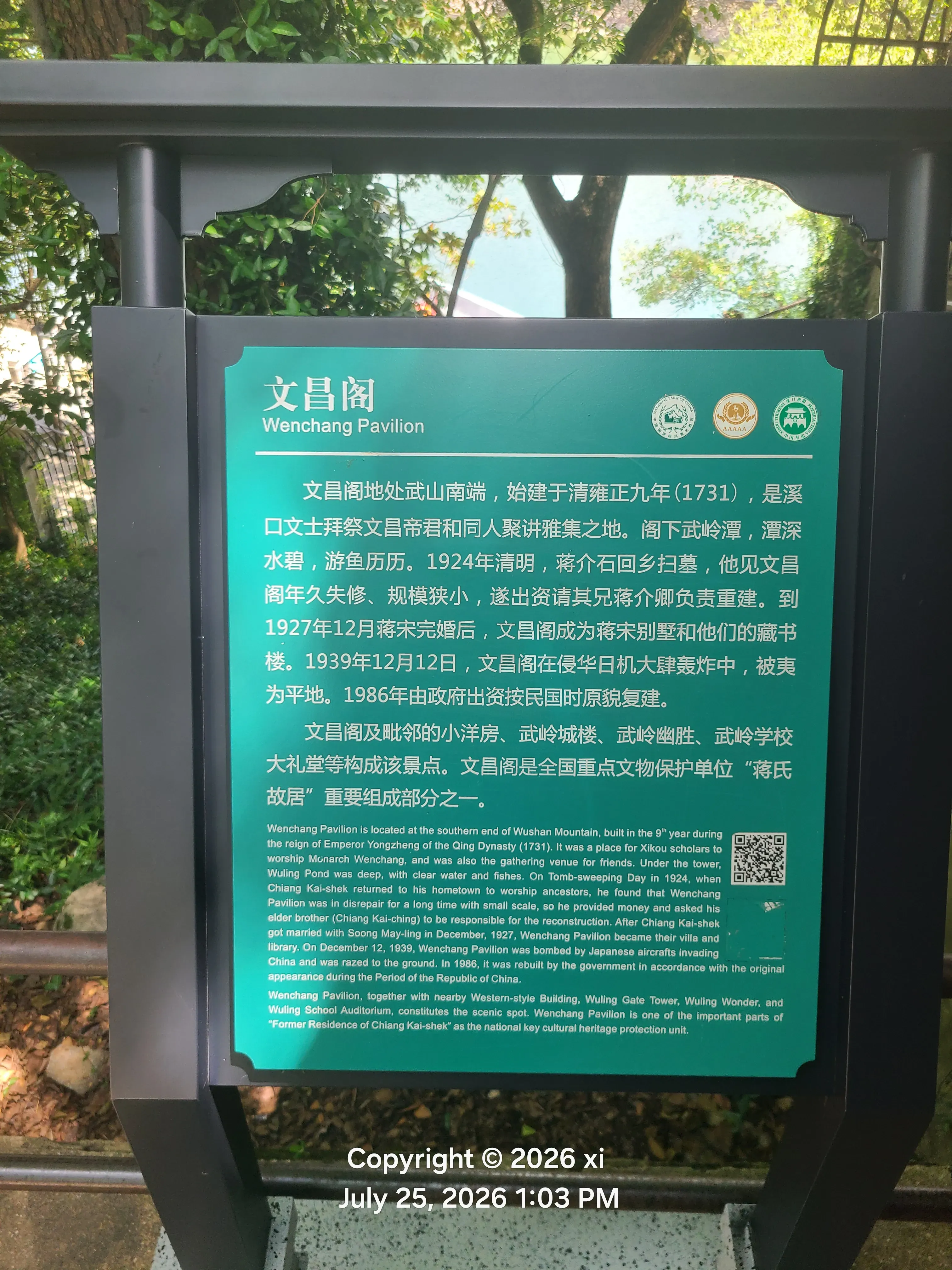
Across from Meiling Coffee, meaning on the left-hand side of the main gate, is Wenchang Pavilion. It was originally built in the Qing dynasty as a gathering place for Xikou’s literati. In 1924, when Chiang Kai-shek came home to tend his ancestors’ graves, he saw how dilapidated it was and paid to have it repaired, and right after the repairs he renamed it “Leting” and turned it into a private villa for himself and Soong Mei-ling
It was flattened by Japanese aircraft in 1939; what you see now was rebuilt to the original design in 1987
As for the interior, since it’s a paid attraction it’s not convenient to go into detail, and if you’re interested you can go see it yourself when you get the chance. Here I’ll just show you what the exterior looks like
Jiang Ancestral Shrine
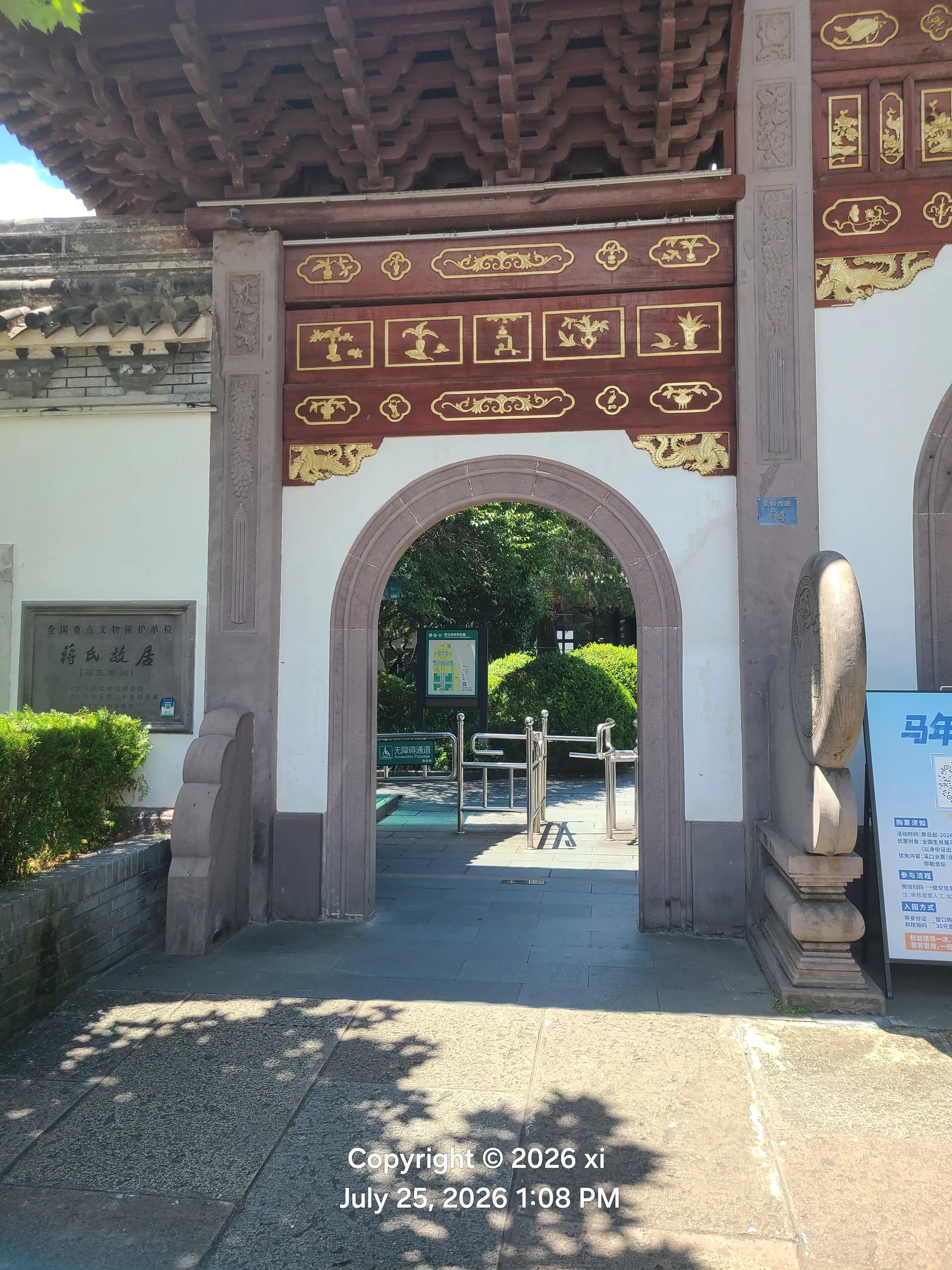
Following the path from the main gate deeper in, you come to the Jiang Ancestral Shrine, where the Jiang family held ancestral rites, weddings, funerals and all kinds of major events. The four characters “忠孝传家” on the archway at the entrance were written by Chiang Kai-shek himself
The shrine has an old and a new section. The rear section is an old building from the Kangxi era of the Qing dynasty; the front section is a new ancestral hall that Chiang Kai-shek paid for out of his own pocket in 1930, and it was built even bigger than his own residence, which shows how much he valued the clan
Likewise, it’s a paid attraction, so it’s not convenient to go into the interior — understood~
The Mysterious McDonald’s
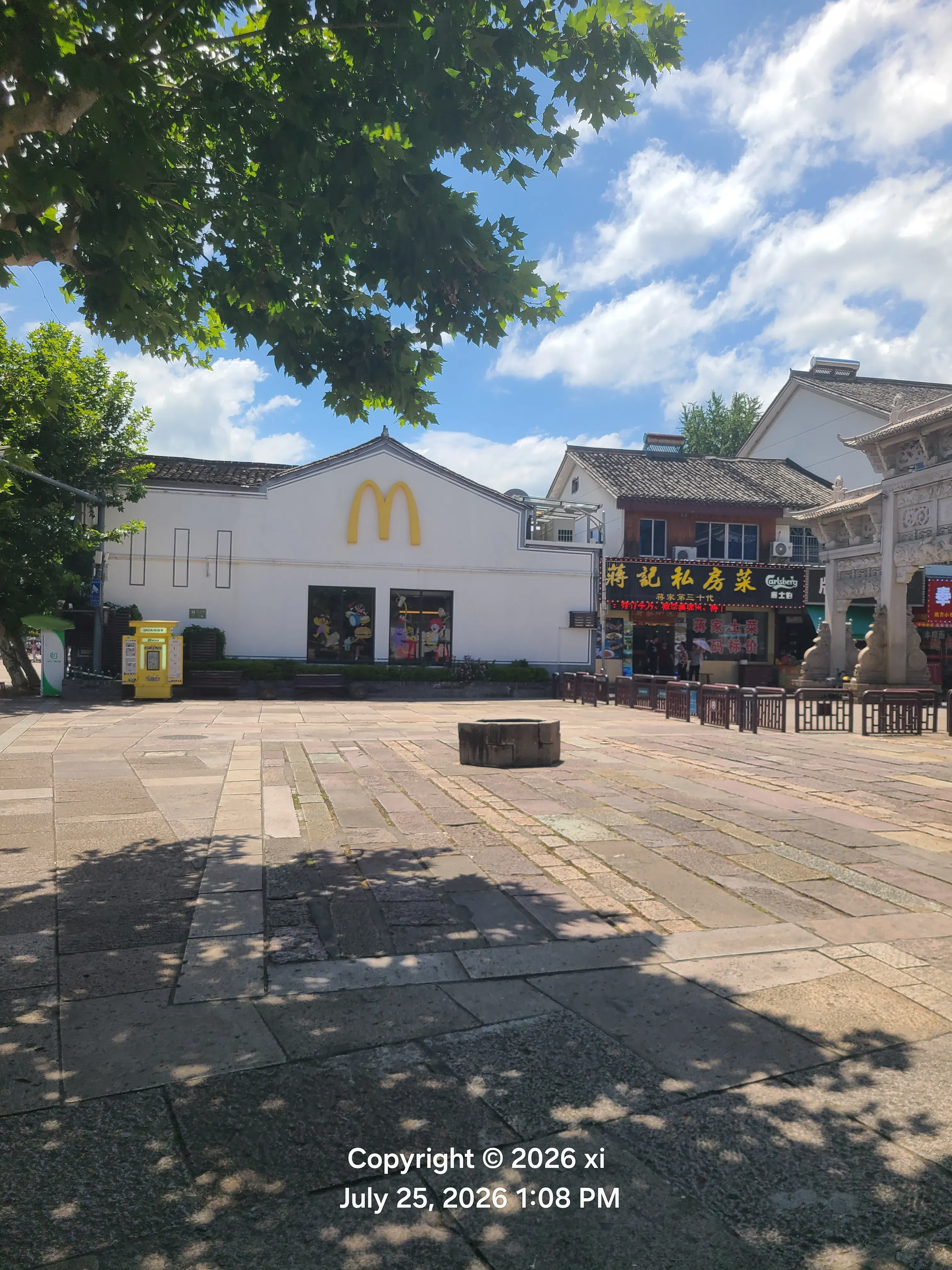
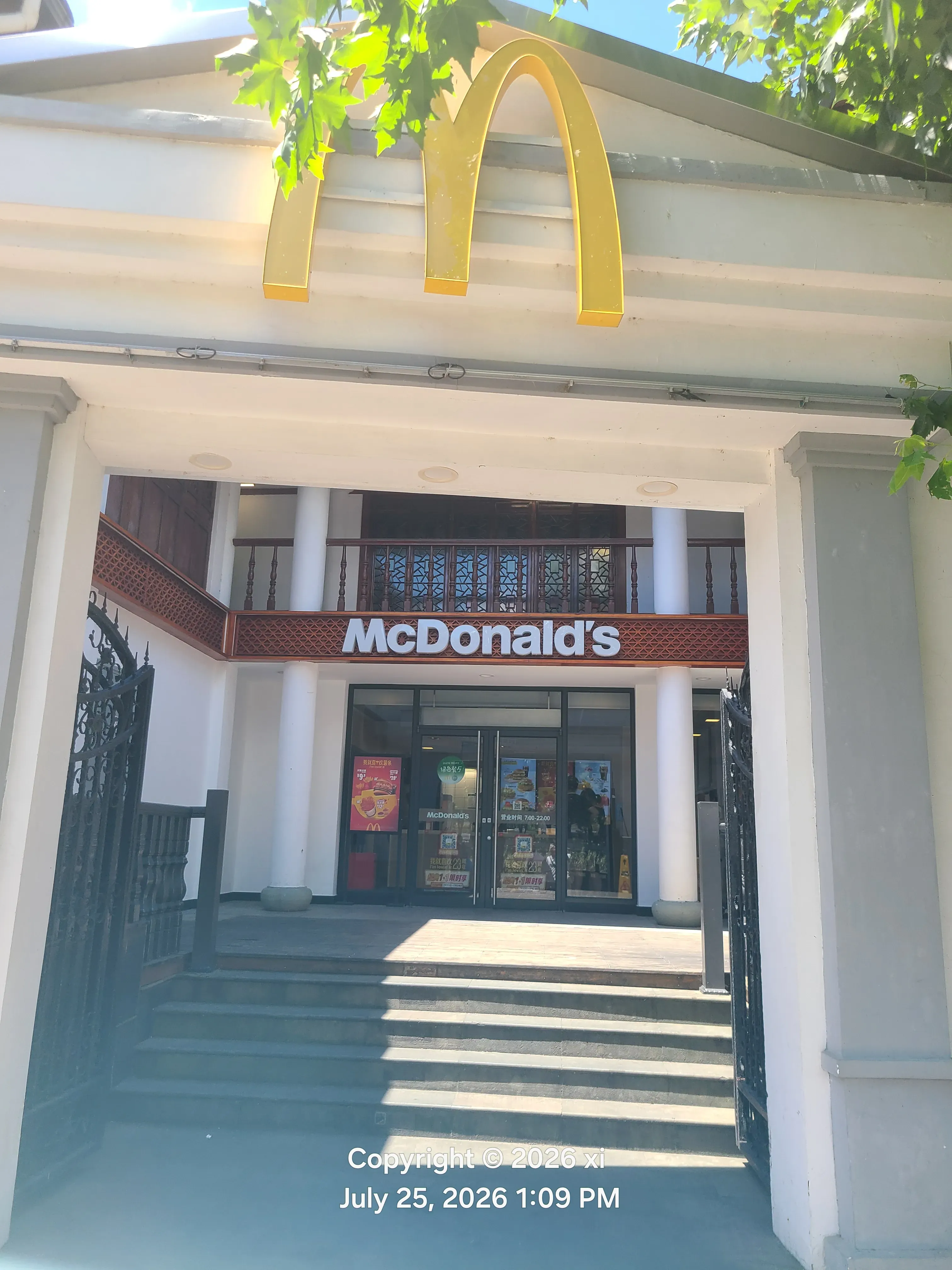
Going deeper still, it gets really hard to keep a straight face: a giant M comes into view — McDonald’s. Well, I was already here, and it happened to be noon and hot, so I went in to top up and save my progress, then carried on
I have to admit, it’s not a bad-looking building
Zhou Shun Fang
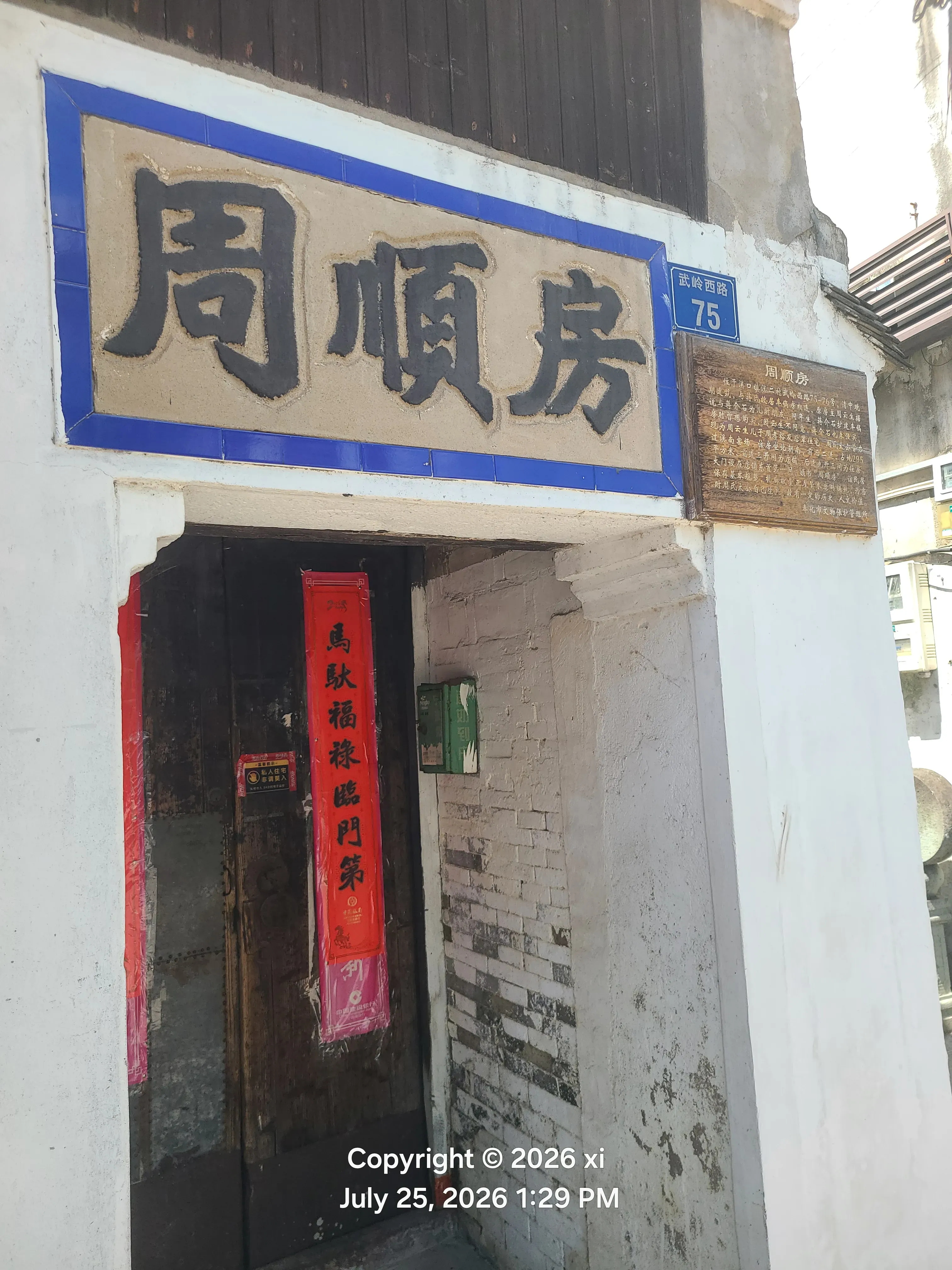
Continuing in the order of going deeper, next is Zhou Shun Fang, and this one has a really interesting story. It’s a small shop right next to Chiang’s former residence selling thousand-layer cakes. In 1928, when Chiang Kai-shek expanded the residence, the neighboring households basically all moved away, but this one refused to budge. The owner’s attitude, plainly put, was “what does it matter to me that you’re the president? I’m not moving.” Chiang Kai-shek really had no way to deal with him, and could only build around him, which is why one wall of the residence is recessed — because this shop is embedded in it. Nowadays people jokingly call it China’s most badass nail household
A Little Interlude
The little shops around Chiang’s former residence are all quite interesting: there are ones selling curios, handicrafts, and Fenghua specialties like thousand-layer cakes, peaches and stinky tofu… but I think the most interesting ones have to be these two photo studios
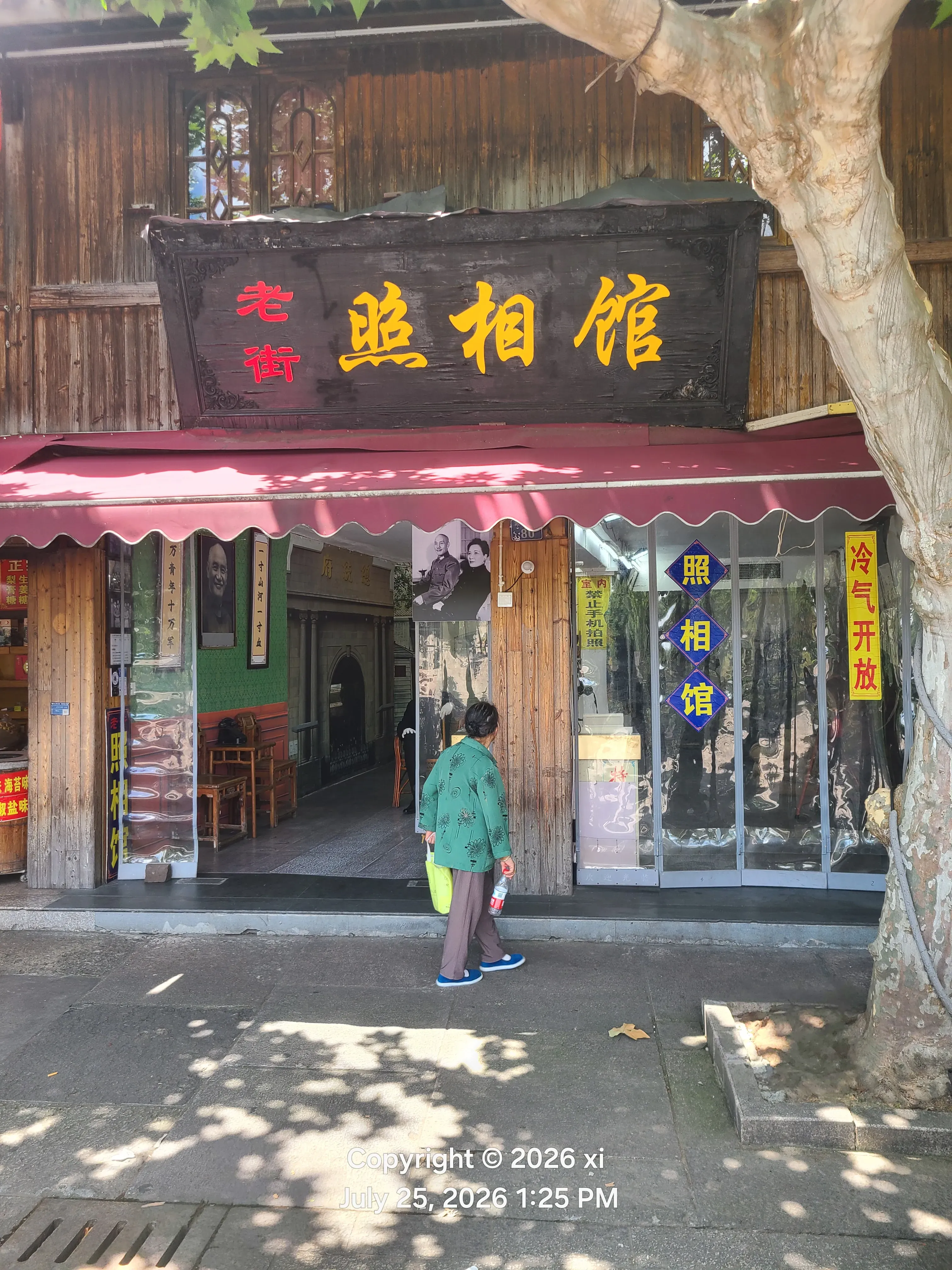
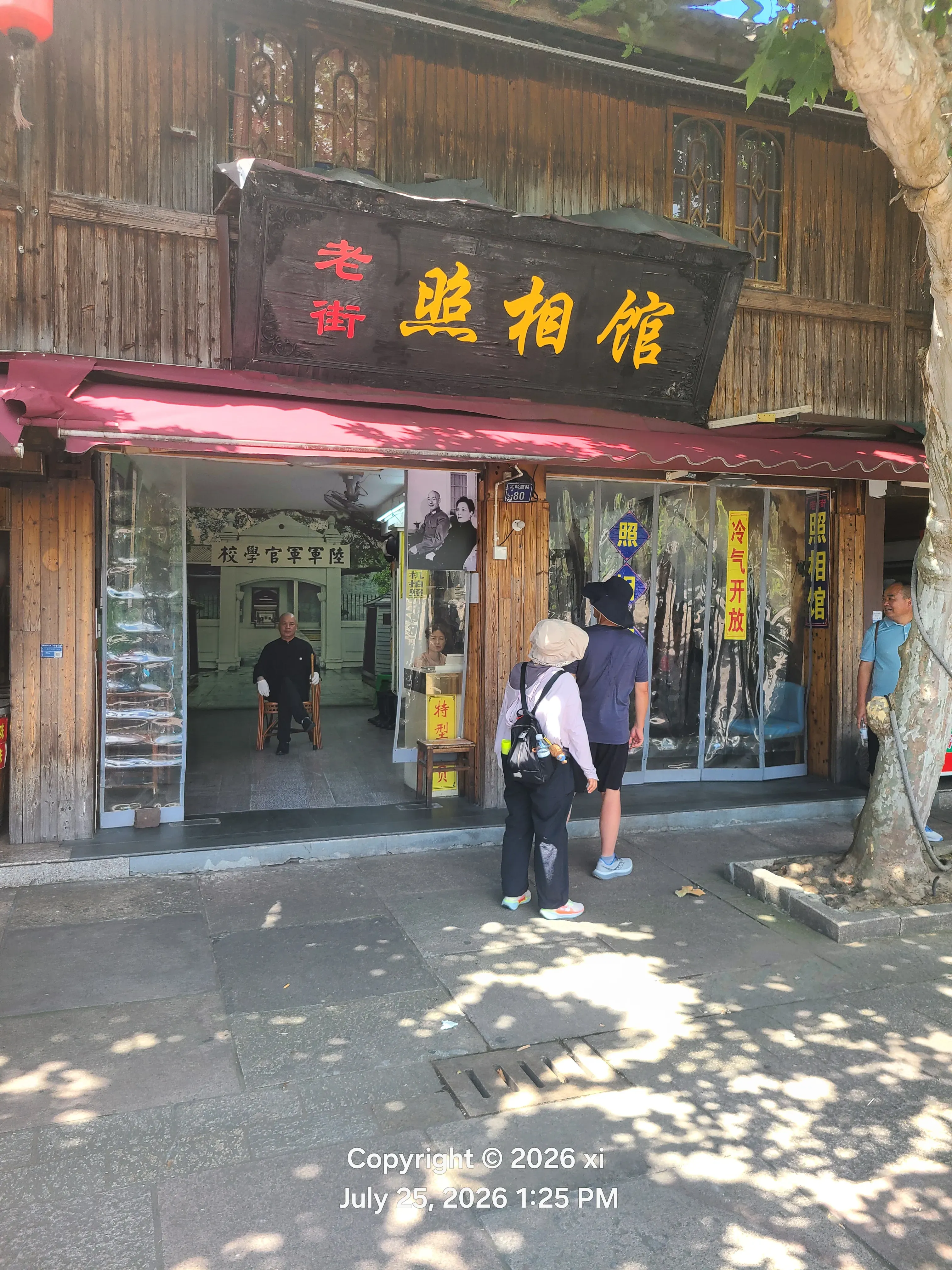
Good lord, there’s a guy sitting right inside cosplaying old Chiang, and people walking by think they’re hallucinating. Almost every passerby turns their head when they walk past this shop; it’s just too funny
Then there are all the thousand-layer cake shops; I snapped a few photos as I went
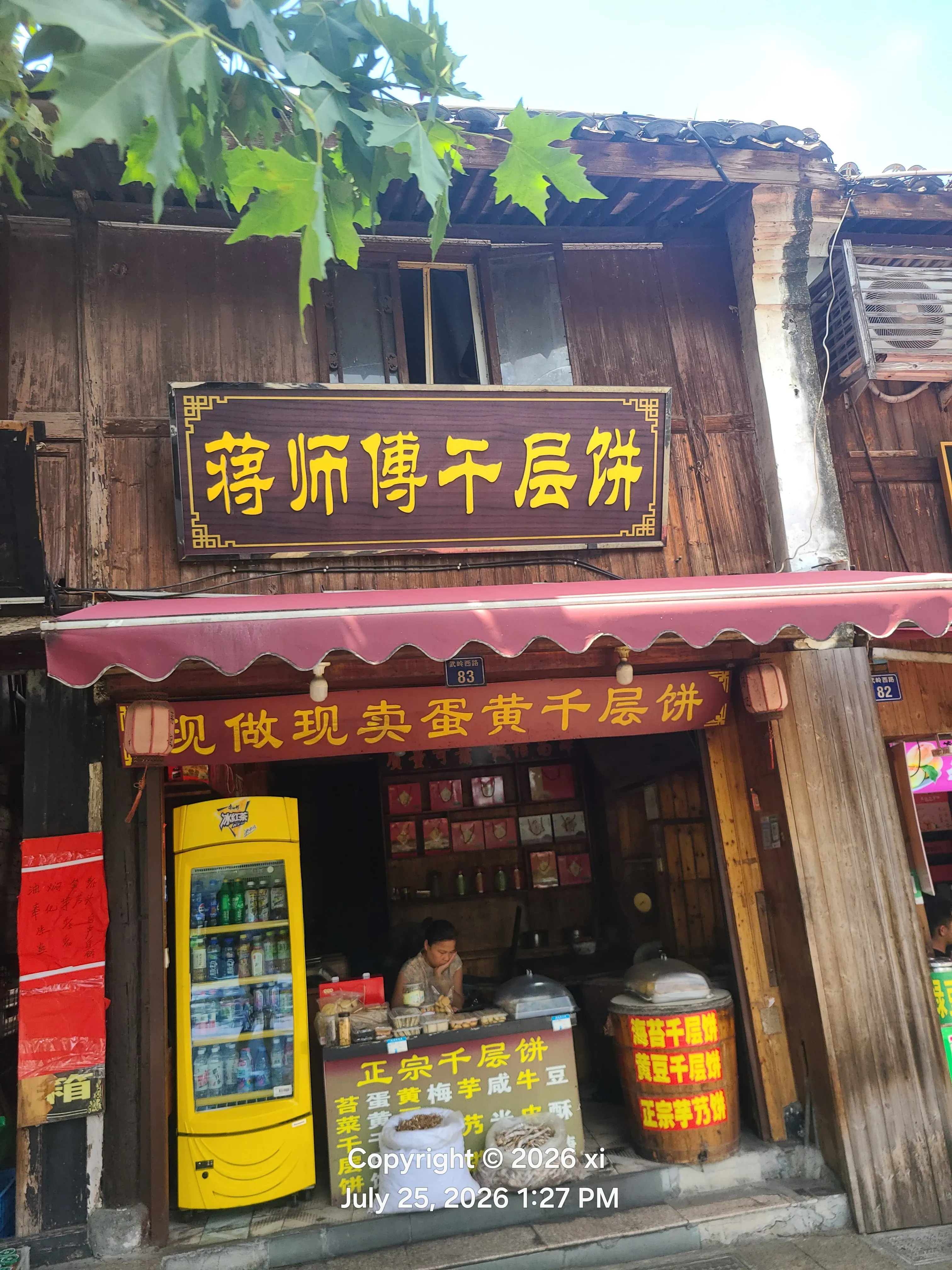
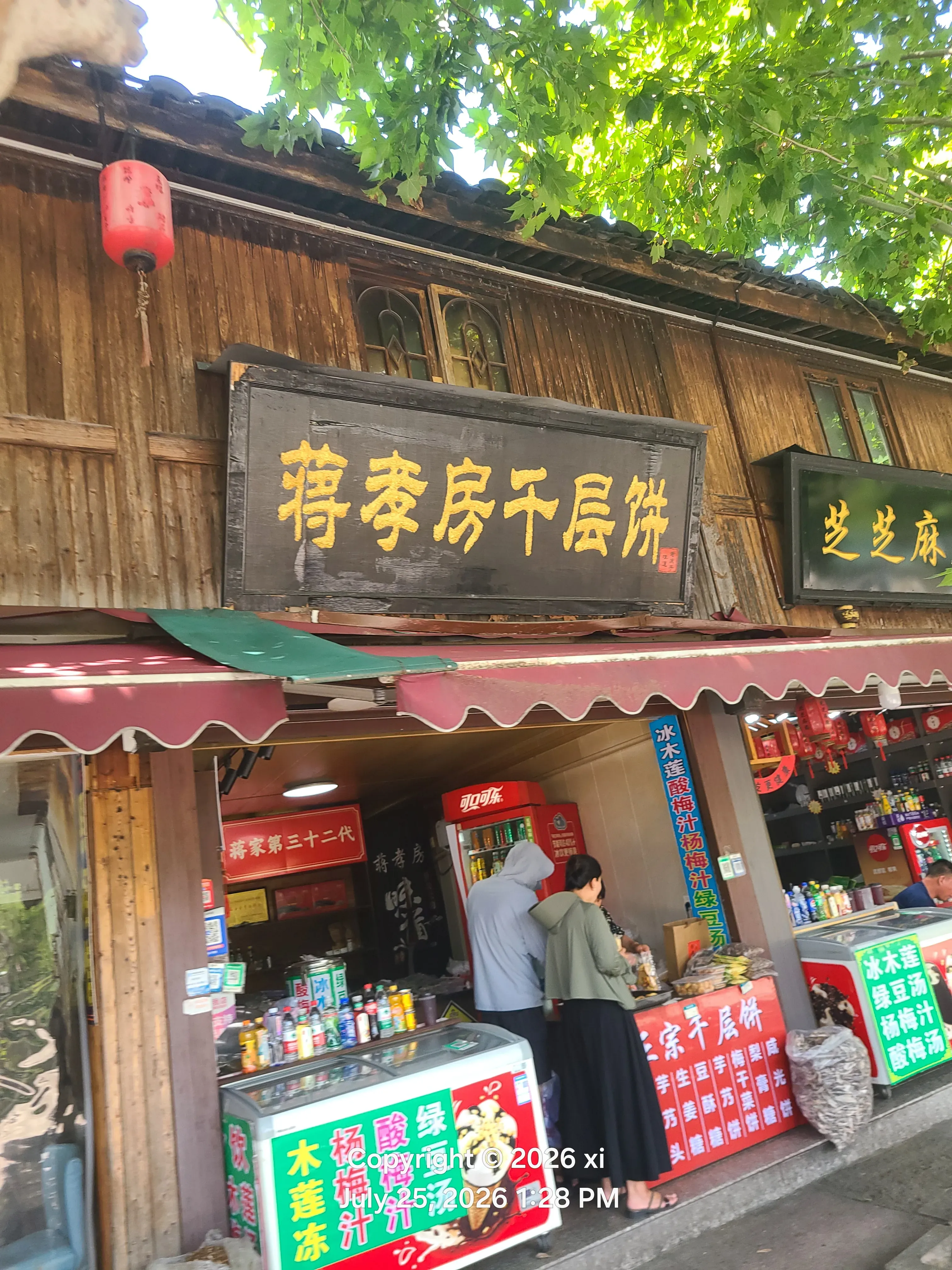
Fenggao House
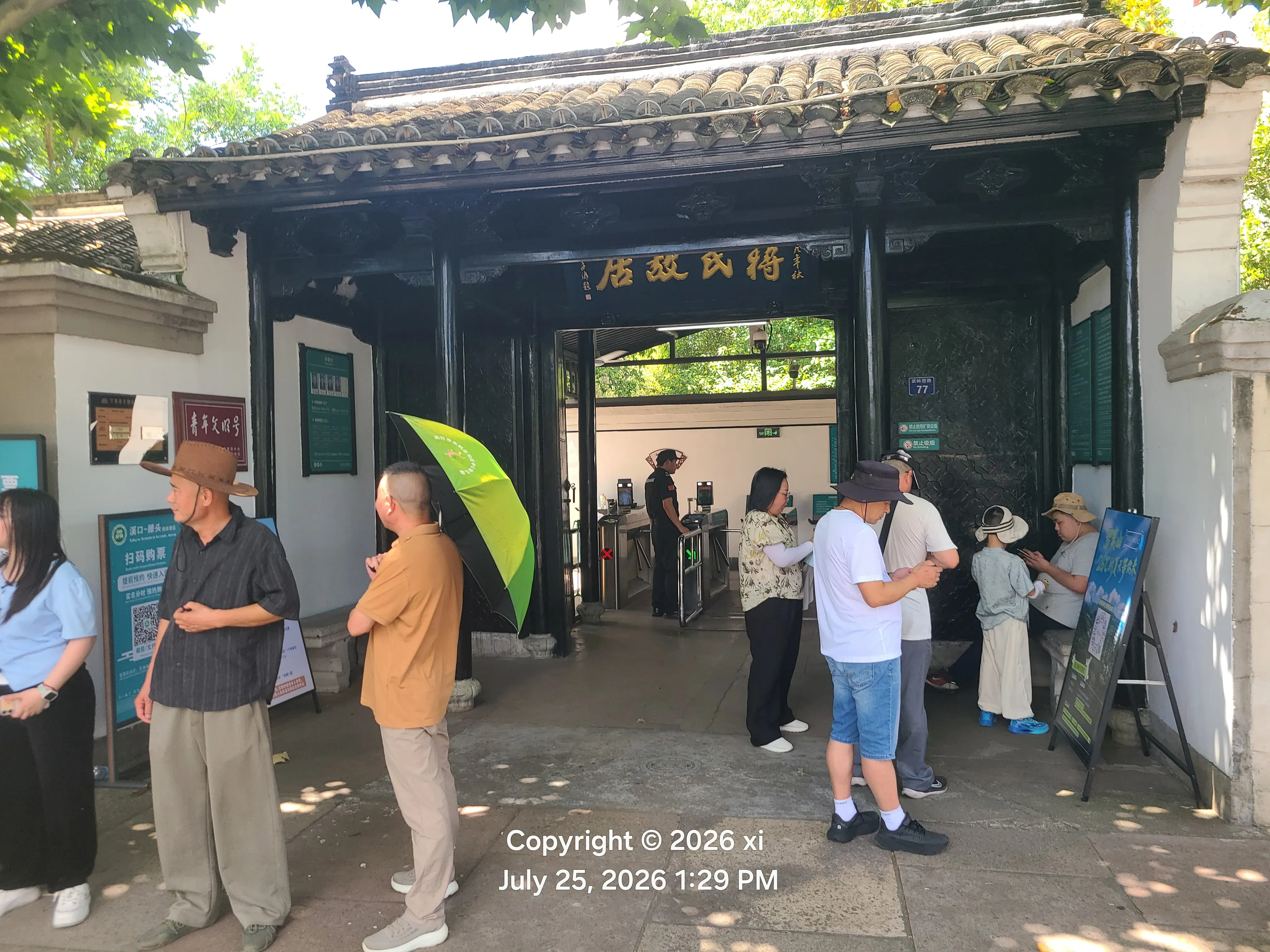
This is the core of Chiang’s former residence, the place where Chiang Kai-shek actually lived. Originally it was just three dilapidated buildings handed down from his ancestors. In 1929, when Chiang Kai-shek became commander-in-chief of the Northern Expedition and returned home in glory, he had the old houses torn down and greatly expanded them, turning it into the current layout of a large residence covering 4,800 square meters: a front hall and rear hall, two wings and four corridors, a typical traditional wealthy household
Quite a few people lived here: the main rooms were for the Jiang family’s womenfolk, the east wing was reserved for Soong Mei-ling but it’s said she hardly ever stayed there — more on that shortly — and the west wing was where his first wife Mao Fumei lived long-term. In the courtyard there are two osmanthus trees, one golden and one silver, said to have been planted by Soong Mei-ling herself
In 1939, when the Japanese bombed Xikou, Mao Fumei had just stepped out the back door to take cover when she was crushed to death here by a collapsing wall. When Chiang Ching-kuo got the news he rushed back overnight and wrote the four characters “以血洗血”, setting them on a stele as a vow
Little Stories About Fenggao House
Below are the little stories I learned about; take a look if you’re interested
Soong Mei-ling had a room but never stayed in it
The east wing of Fenggao House was set aside specifically for Soong Mei-ling, but she never actually lived there. The reason is simply this: although Mao Fumei had divorced Chiang Kai-shek, she flatly refused to move out and stayed in the west wing, continuing to be the mistress of Fenggao House. Soong Mei-ling came from a distinguished family, so naturally she wasn’t willing to go live under the same roof as the ex-wife, and Chiang Kai-shek had no choice but to arrange for her to stay at Wenchang Pavilion instead
Chiang Kai-shek snuck back every morning to eat
When Chiang Kai-shek returned to Xikou, he and Soong Mei-ling stayed at Wenchang Pavilion while Mao Fumei lived at Fenggao House, only a few hundred meters apart. Soong Mei-ling was in the habit of sleeping in, and every morning Chiang Kai-shek would quietly slip back to Fenggao House to eat the mugwort rice balls and home-style dishes Mao Fumei made for him. By the time he got back, Soong Mei-ling still hadn’t gotten up. His subordinates all saw it, of course, but none of them were idle enough to go report it
The two osmanthus trees in the courtyard
In the central courtyard there’s one golden osmanthus and one silver osmanthus, said to have been planted by Soong Mei-ling herself — the only mark she left on this house she wasn’t all that willing to live in
1949, the last hundred days
In January 1949 Chiang Kai-shek announced his resignation and slunk back to Xikou, where he stayed at Fenggao House for nearly a hundred days: the longest he ever stayed here in his life. That year the whole family had New Year’s Eve dinner in the Baoben Hall, in April he celebrated Chiang Ching-kuo’s 40th birthday, and he personally wrote a plaque reading “寓理帅气” and had it hung up. Then on April 25 the father and son left Xikou and never came back
Epilogue
There were a few places I didn’t actually visit, because it was just too hot at the time and I hurried back. The exterior is basically all little shops, and as I said at the start, free places are often the first to turn into places that sell things
One more amusing thing: on my way back, there was another guy cosplaying old Chiang, eating something
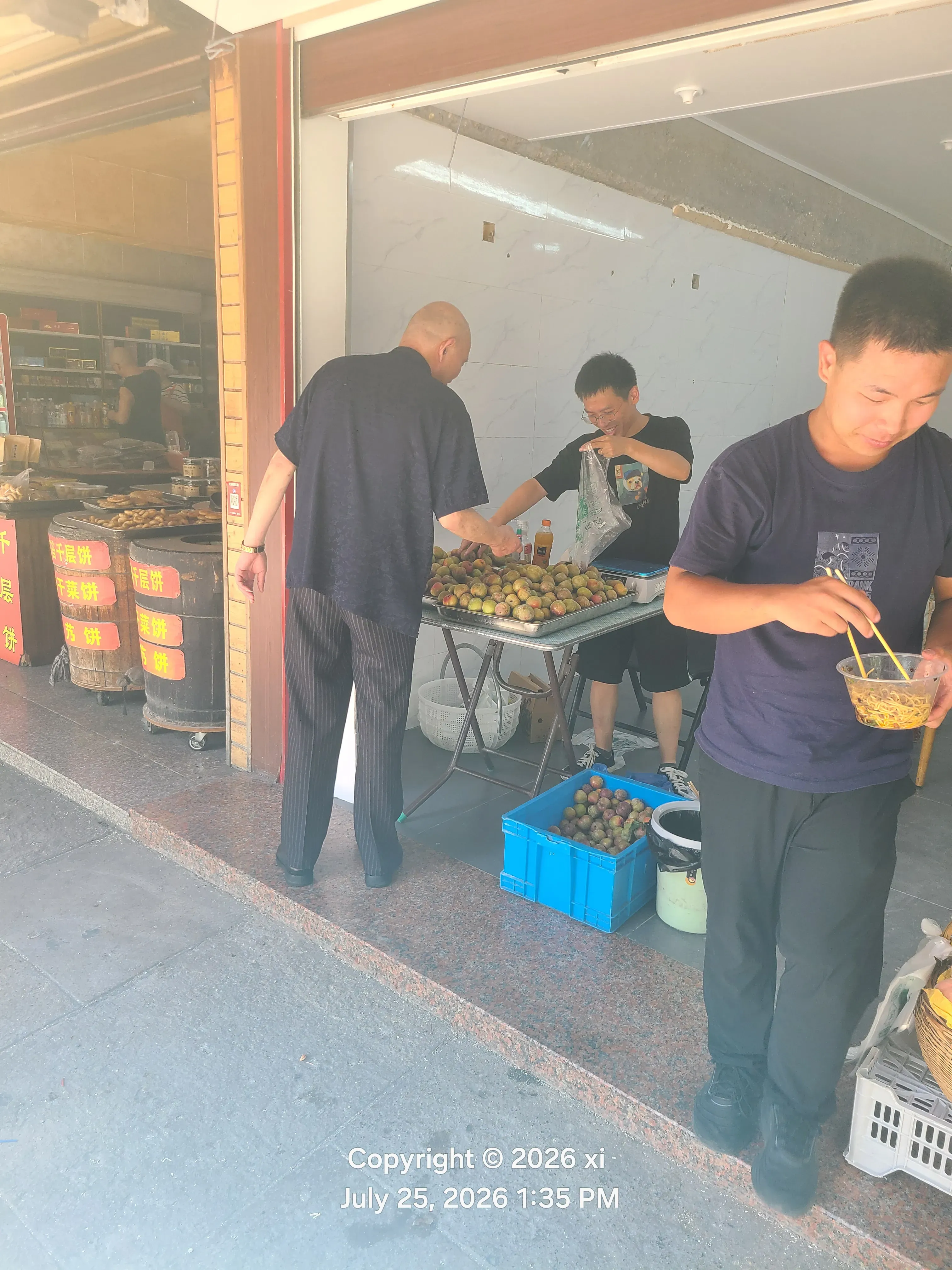
Old Chiang splitting US aid with He Yingqin; you can see old Chiang grinning from ear to ear in the face of this massive haul
There actually used to be a lot of old Chiang cosplayers; maybe it was the heat today, but there were far fewer than usual which shows old Chiang is afraid of the red sun
After that it was just heading back the same way under the blazing sun. If you’re interested, you can go see it yourself when you get the chance; it’s quite fun. An adult ticket is around a hundred-something yuan, and students and children seem to get half price. You can walk around the exterior for free; going inside to visit requires a ticket
And that’s basically Chiang’s former residence